Heritage & Unity
Karbi Heritage & Unity 👋
Karbi Heritage & Unity represents the heart and soul of the Karbi community, rooted in centuries-old traditions, shared values, and a strong sense of togetherness. The Karbi Youth Festival serves as a cultural bridge between generations, where elders pass down knowledge and youth proudly carry forward the legacy. Traditional dances, folk music, rituals, indigenous games, cultural parades, and authentic Karbi cuisine come together to reflect the community’s way of life. More than a celebration, it is a symbol of unity, identity, and cultural pride—strengthening social bonds and ensuring the preservation of Karbi heritage for generations to come.
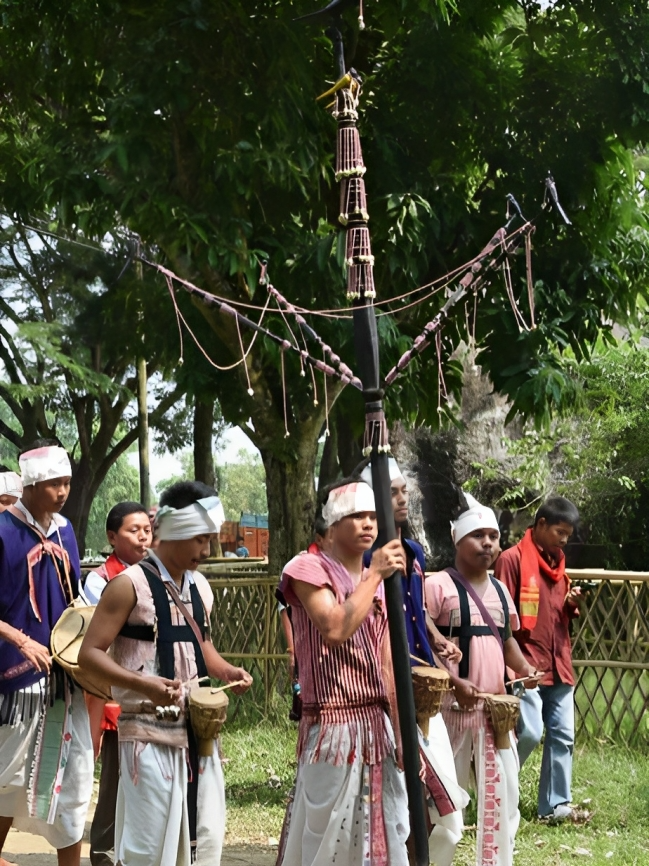
JAMBILI ATHON
JAMBILI ATHON
👋JAMBILI ATHON 👋
Jambili Athon is curved out from a species of evergreen tree known as Bengvoi ke’er or Scarlet Wrightia (Wrightia Coccinea Sims (Apocynacae). This species is selected because the timber does not crack or bend. From being a sacred object owned only by Chiefs and village headmen, the regards for preservation of arts and crafts of the tribe have paved the way for this Jambili Athon to get into the limelight in a much bigger platform and thus it is now viewed as the national symbol of the Karbi tribe. Earlier, the Jambili Athon was only used in a funeral festival known as Chomkan or Chomangkan where the official participation of each village is counted by the numbers of Jambili Athon present in the festival. Due to religious taboo, as it is being used only during the funeral festival, it was considered as an object and mostly remained wrapped and kept in a secluded place. The ‘RITNONG CHINGDI’ is a dance performed by the youths at the time of sowing the seeds at the cultivation site. On completion of the cultivation season the youths return to their respective dormitories known as ‘TERANK’ and learn all those arts of CRAFTING (wooden and bamboo) including rituals, customs and traditions and the damsels learn the art of weaving, crafting, singing from their respective elders. The youths then gather together for collecting the bamboo shoots by performing the dance known as ‘HENUP AHI KEKAN’ which is kept and stored for fulfilling the year long requirement of bamboo shoots. During the harvesting season the youths(male) can be seen threshing and carrying sacks of paddy on their shoulders to the granary, dancing away the “HACHA KEKAN” (harvesting dance) with joy at the success of their cultivating efforts. After storage of paddy at the granary, some amount is taken out for husking to produce rice for daily meal. It is during this husking of paddy by the damsels that the “LENGPUM SOKCHON” dance is performed in rhythm with the motion of pounding rice using specially crafted wooden mortar and pestel called “LONG and LENGPUM”.
No Manuscript
No Manuscript 👋
No Manuscript 👋
Customs, traditions, rituals, songs and dances are followed as orally taught and passed from the older generation to the younger generation without any hand written manuscript. That is, the Karbi customs and traditions are passed from generation to generation through word of mouth. Taught through faith The legacy of retrospecting and revering at least the last five(5) mentors in hierarchy and dead family members are practiced and followed by the Karbi tribe. It shows the flow of culture, art, craft, custom and tradition from one generation to the next generation.
Taught through faith
Taught through faith👋
Taught through faith 👋
Customs, traditions, rituals, songs and dances are followed as orally taught and passed from the older generation to the younger generation without any hand written manuscript. That is, the Karbi customs and traditions are passed from generation to generation through word of mouth. Taught through faith The legacy of retrospecting and revering at least the last five(5) mentors in hierarchy and dead family members are practiced and followed by the Karbi tribe. It shows the flow of culture, art, craft, custom and tradition from one generation to the next generation.